







Cloud Computing and the NetBook Phenomenon - Analysis
 Tuesday, October 28, 2008 at 12:45PM
  The concept of cloud computing has been around ever since the Internet has been able to virtualize applications and software. The big idea is that you no longer need a power hungry or high-spec PC or notebook to be productive since your storage, applications and files can “live” on the Internet.
Applications like web based email (Yahoo, Hotmail, Gmail) and Google Docs, which clones he functionality of Microsoft Office but which requires you to be connected to the Internet in order to use it, are ushering a new era of cloud computing which is less hardware focused yet offers universal access from any terminal connected to the World Wide Web. In theory, you don’t have to bring all your files with you since you can access them from almost any computer.
Continue reading after the jump!
Aside from Google, whose Google Docs and Google Calendar web applications enable web based usability, a number of other notable services are starting to spring up. Adobe, considered a software giant specially since it owns the premium design and web development applications Photoshop, Flash and Dreamweaver has recently unvelied Photoshop Express (https://www.photoshop.com/express/landing.html) which is a pared-down, web based version of the popular image editing and design application that allows users to edit images online.
Multiple Access Points
One of the more exciting benefits of the Cloud computing model is that you can use your applications from multiple workstations and still have the desired results. As anyone who frequently moves computers will tell you, transferring files and applications and getting them to work on your new system can be a pain. With the cloud computing model, the Internet is your computer and the hardware you use are just the terminals that allow you to manipulate your information.
I have been using web based email for years. It has enabled me to avoid cluttering up my PCs with possible viruses as well as gigabytes worth of spam. At the same time, I can freely move from home to work computer without fearing the loss of data (provided that nothing happens to the server where all my mail is located). Similarly, using web based photo repositories like Photobucket and Flickr.com enables users to keep thousands of digital images and photos that can be accessed from any computer connected to the Internet.
EEE PC Ripple Effect
If you had told me three years ago that we would have affordable yet functional sub-notebooks which were less than three pounds and that could manage most applications I wouldn’t have believed you. Sub-notebooks are considered the sportscar exotics of the portable computer world. They are certainly sexy and put a premium on form but have been known to be impractical because of their lack of functionality and their hefty price tags.
Asus has changed the game with their EEE PC subnotebook, a cheaper, Linux powered subnotebook that is an ideal cloud computing appliance. Here’s a small, wireless and truly portable device that can integrate with most of the web services out there and in a short period of time a number of EEE PC wannabees have surfaced on the market.
Like Asus, HP, Illus, MSI and a few other computer makers are trading optical drives, large disk capacity and girth for portability and connectivity. These are the signs of a revolution in the making which can perhaps be more successful than the UMPC (Ultra Mobile PC) tablets from a few years ago which failed to impact the mainstream for lack of functionality and for their high prices.
Why are the EEE PC and its ilk stirring excitement, because their built in keyboards make them useful and acceptable in both the personal computing and enterprise markets as true computers and business machines. Something that toylike UMPCs have struggled with and with good reason.
Pushing technologies to the Cloud
For cloud computing to move from novel concept to wave of the future, a number of technologies have to first evolve. Widespread Internet access needs to become more accessible and more affordable. City wide Wi-Fi (WIMAX) has been on the radar for four years now but no major developments have pushed it forth. There’s 3G, EVDO, HSDPA, satellite and telecom-based Internet access but they are expensive for the general public to adopt and more suited towards time-critical business applications.
Offer better and cheaper wireless Internet and you will see Cloud Computing take off and devices like the EEE PC and even smartphones like Apple’s iPhone become much more than than sleek tech toys but actual personal productivity and communication devices for a new age.
The concept of cloud computing has been around ever since the Internet has been able to virtualize applications and software. The big idea is that you no longer need a power hungry or high-spec PC or notebook to be productive since your storage, applications and files can “live” on the Internet.
Applications like web based email (Yahoo, Hotmail, Gmail) and Google Docs, which clones he functionality of Microsoft Office but which requires you to be connected to the Internet in order to use it, are ushering a new era of cloud computing which is less hardware focused yet offers universal access from any terminal connected to the World Wide Web. In theory, you don’t have to bring all your files with you since you can access them from almost any computer.
Continue reading after the jump!
Aside from Google, whose Google Docs and Google Calendar web applications enable web based usability, a number of other notable services are starting to spring up. Adobe, considered a software giant specially since it owns the premium design and web development applications Photoshop, Flash and Dreamweaver has recently unvelied Photoshop Express (https://www.photoshop.com/express/landing.html) which is a pared-down, web based version of the popular image editing and design application that allows users to edit images online.
Multiple Access Points
One of the more exciting benefits of the Cloud computing model is that you can use your applications from multiple workstations and still have the desired results. As anyone who frequently moves computers will tell you, transferring files and applications and getting them to work on your new system can be a pain. With the cloud computing model, the Internet is your computer and the hardware you use are just the terminals that allow you to manipulate your information.
I have been using web based email for years. It has enabled me to avoid cluttering up my PCs with possible viruses as well as gigabytes worth of spam. At the same time, I can freely move from home to work computer without fearing the loss of data (provided that nothing happens to the server where all my mail is located). Similarly, using web based photo repositories like Photobucket and Flickr.com enables users to keep thousands of digital images and photos that can be accessed from any computer connected to the Internet.
EEE PC Ripple Effect
If you had told me three years ago that we would have affordable yet functional sub-notebooks which were less than three pounds and that could manage most applications I wouldn’t have believed you. Sub-notebooks are considered the sportscar exotics of the portable computer world. They are certainly sexy and put a premium on form but have been known to be impractical because of their lack of functionality and their hefty price tags.
Asus has changed the game with their EEE PC subnotebook, a cheaper, Linux powered subnotebook that is an ideal cloud computing appliance. Here’s a small, wireless and truly portable device that can integrate with most of the web services out there and in a short period of time a number of EEE PC wannabees have surfaced on the market.
Like Asus, HP, Illus, MSI and a few other computer makers are trading optical drives, large disk capacity and girth for portability and connectivity. These are the signs of a revolution in the making which can perhaps be more successful than the UMPC (Ultra Mobile PC) tablets from a few years ago which failed to impact the mainstream for lack of functionality and for their high prices.
Why are the EEE PC and its ilk stirring excitement, because their built in keyboards make them useful and acceptable in both the personal computing and enterprise markets as true computers and business machines. Something that toylike UMPCs have struggled with and with good reason.
Pushing technologies to the Cloud
For cloud computing to move from novel concept to wave of the future, a number of technologies have to first evolve. Widespread Internet access needs to become more accessible and more affordable. City wide Wi-Fi (WIMAX) has been on the radar for four years now but no major developments have pushed it forth. There’s 3G, EVDO, HSDPA, satellite and telecom-based Internet access but they are expensive for the general public to adopt and more suited towards time-critical business applications.
Offer better and cheaper wireless Internet and you will see Cloud Computing take off and devices like the EEE PC and even smartphones like Apple’s iPhone become much more than than sleek tech toys but actual personal productivity and communication devices for a new age. 
 The long search for the perfect set of headphones to accompany our MP3 players or smartphones has often ended in heartbreak. The stock buds that come with most of these devices are generally okay but fail to give you the best experience in terms of sound quality, comfort and design.
For the Apple iPhone 3G, which comes with headphones that integrate a microphone for hands-free use – the choices for an upgrade are even more limited. You can use any brand of headphones but they will not be able to act as a microphone when a call comes in.
Hit the jump for more on the V-Modas!
Enter the V-Moda Vibe Duo in-ear headphones. This is one product that is as well designed and built as high-end MP3 players and smartphones. The Vibe Duo is so named because not only is it a decent set of noise-isolating headphones but it double as hands free for your iPhone and manages to control your tracks remotely. This is the one set of headphones that should have been included with each iPhone 3G.
It is a bit on the pricey side (US $100) but the V-Moda Duo is still not as expensive as some of the higher end brands which are just headphones that do not come with the microphone or with a full complement of replacement earbuds (in different three sizes of comfy silicone, because all ears are sized differently).
Everything about the V-Moda phones is well conceptualized and designed. Instead of rubber wire, the headphones are laced with sturdy and pliable cloth, the choice of metal and plastics are also superb. Sound quality is excellent but tends to be heavy on the bass, which some people prefer.
There have been reports, however, that the V-Modes are a bit delicate and may fray if misused. The company offers a comprehensive one-year warranty and is known to quickly send replacements.
Those already investing on iPhone 3Gs and who aren’t happy with the quality or the fit of the stock earbuds should consider the V-Moda Vibe Duo for its great mix of features and compatibility with the iPhone 3G.
The long search for the perfect set of headphones to accompany our MP3 players or smartphones has often ended in heartbreak. The stock buds that come with most of these devices are generally okay but fail to give you the best experience in terms of sound quality, comfort and design.
For the Apple iPhone 3G, which comes with headphones that integrate a microphone for hands-free use – the choices for an upgrade are even more limited. You can use any brand of headphones but they will not be able to act as a microphone when a call comes in.
Hit the jump for more on the V-Modas!
Enter the V-Moda Vibe Duo in-ear headphones. This is one product that is as well designed and built as high-end MP3 players and smartphones. The Vibe Duo is so named because not only is it a decent set of noise-isolating headphones but it double as hands free for your iPhone and manages to control your tracks remotely. This is the one set of headphones that should have been included with each iPhone 3G.
It is a bit on the pricey side (US $100) but the V-Moda Duo is still not as expensive as some of the higher end brands which are just headphones that do not come with the microphone or with a full complement of replacement earbuds (in different three sizes of comfy silicone, because all ears are sized differently).
Everything about the V-Moda phones is well conceptualized and designed. Instead of rubber wire, the headphones are laced with sturdy and pliable cloth, the choice of metal and plastics are also superb. Sound quality is excellent but tends to be heavy on the bass, which some people prefer.
There have been reports, however, that the V-Modes are a bit delicate and may fray if misused. The company offers a comprehensive one-year warranty and is known to quickly send replacements.
Those already investing on iPhone 3Gs and who aren’t happy with the quality or the fit of the stock earbuds should consider the V-Moda Vibe Duo for its great mix of features and compatibility with the iPhone 3G.

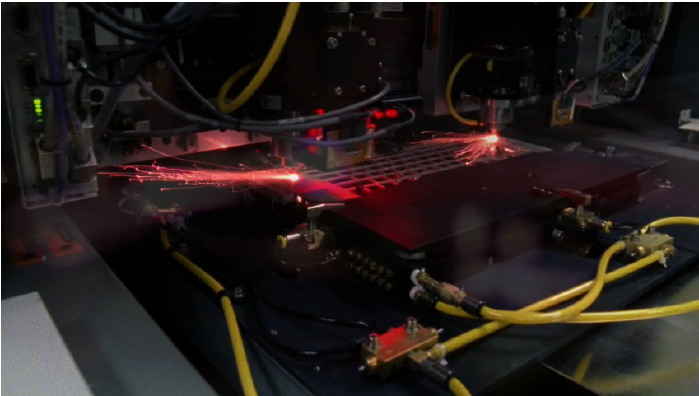 Beauty isn’t all skin deep, however. The Pro has a unique dual graphics card setup that enables it to run as economically as the MacBook (five hours) with the NVDIA 9400M but power up its graphics chops with the NVDIA 9600M GT discrete card for processing video or animation. The only downside is that you cannot enable this on the fly and have to logout and log back in to kickstart the faster GPU that runs the battery down in four hours.
The new Pro is two-tenths of a pound heavier than the last version, a wee bit wider but is substantially thinner with the tapered edges a la the MacBook and the Air. It is available in 2.4Ghz, 2.53 GHz and on special order, a mind-numbing 2.8GHz Core 2 Duo. It’s hard to grasp how much processing power these skinny notebooks pack until you see one in action playing games or running graphic intensive tasks.
Even if it is almost identical to the MacBook, the new Pro feels a bit more polished overall. The keyboard is a little stiffer, with less give and the LED screen seems a lot better in terms of clarity and color reproduction. I am inclined to think that the Pros are using a better or more expensive screen. Or maybe I am just jealous.
Sadly, there is no longer a matte screen option on the MacBook Pro. It is glass and glossy, which may be a deal breaker for a lot of matte loyalists. I was one, but have now embraced the benefits of glossy, which is great most of the time but pretty useless outdoors and totally crappy under direct sunlight.
The MacBook Pro is ideal for those who need 15 inches of high performance muscle and the ports that the MacBook lacks. FireWire 400, a big deal for mostly video editors and those who dislike USB 2.0, is all but gone. You do get a backwards-compatible FireWire 800 port that isn’t available on the aluminum MacBook but still available for the entry-level plastic Macbooks. Apple has neglected to offer multi-card readers or fingerprint reader on any of their notebooks; these are somewhat standard on cheaper laptops and even netbooks.
It still is a sexy beast and with the new unibody enclosure it is also surprisingly strong. Sadly, the 17-inch MacBook has not been given a facelift and many wonder if that large-ish desktop replacement will be silently phased out, much like the beloved 12-inch PowerBook G4 that was kept on briefly and then dropped as the MacBook emerged.
A new 24-inch LED Apple Cinema Display was released to complement the new Macbooks and this thin display integrates Magsafe, the new Mini Display Prot (taking over DVI) and USB 2.0 port) to act as a sort of dock for the portables. The displays now come with Apple’s iSight camera built in, which is a great perk.
Conclusion
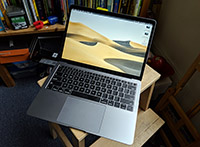
Powerful inside and out but with a few niggling compromises, the new aluminum MacBook and MacBook Pro usher in a new era of performance, portability and cool to Apple’s notebook line.
Improved processors, stronger construction and sleeker bodies, innovative glass trackpads, bright LED screens and the intelligence and power to run OS X Leopard as well as Windows and Linux make new Apple MacBooks runaway picks this month’s Pole Position.
Beauty isn’t all skin deep, however. The Pro has a unique dual graphics card setup that enables it to run as economically as the MacBook (five hours) with the NVDIA 9400M but power up its graphics chops with the NVDIA 9600M GT discrete card for processing video or animation. The only downside is that you cannot enable this on the fly and have to logout and log back in to kickstart the faster GPU that runs the battery down in four hours.
The new Pro is two-tenths of a pound heavier than the last version, a wee bit wider but is substantially thinner with the tapered edges a la the MacBook and the Air. It is available in 2.4Ghz, 2.53 GHz and on special order, a mind-numbing 2.8GHz Core 2 Duo. It’s hard to grasp how much processing power these skinny notebooks pack until you see one in action playing games or running graphic intensive tasks.
Even if it is almost identical to the MacBook, the new Pro feels a bit more polished overall. The keyboard is a little stiffer, with less give and the LED screen seems a lot better in terms of clarity and color reproduction. I am inclined to think that the Pros are using a better or more expensive screen. Or maybe I am just jealous.
Sadly, there is no longer a matte screen option on the MacBook Pro. It is glass and glossy, which may be a deal breaker for a lot of matte loyalists. I was one, but have now embraced the benefits of glossy, which is great most of the time but pretty useless outdoors and totally crappy under direct sunlight.
The MacBook Pro is ideal for those who need 15 inches of high performance muscle and the ports that the MacBook lacks. FireWire 400, a big deal for mostly video editors and those who dislike USB 2.0, is all but gone. You do get a backwards-compatible FireWire 800 port that isn’t available on the aluminum MacBook but still available for the entry-level plastic Macbooks. Apple has neglected to offer multi-card readers or fingerprint reader on any of their notebooks; these are somewhat standard on cheaper laptops and even netbooks.
It still is a sexy beast and with the new unibody enclosure it is also surprisingly strong. Sadly, the 17-inch MacBook has not been given a facelift and many wonder if that large-ish desktop replacement will be silently phased out, much like the beloved 12-inch PowerBook G4 that was kept on briefly and then dropped as the MacBook emerged.
A new 24-inch LED Apple Cinema Display was released to complement the new Macbooks and this thin display integrates Magsafe, the new Mini Display Prot (taking over DVI) and USB 2.0 port) to act as a sort of dock for the portables. The displays now come with Apple’s iSight camera built in, which is a great perk.
Conclusion
Powerful inside and out but with a few niggling compromises, the new aluminum MacBook and MacBook Pro usher in a new era of performance, portability and cool to Apple’s notebook line.
Improved processors, stronger construction and sleeker bodies, innovative glass trackpads, bright LED screens and the intelligence and power to run OS X Leopard as well as Windows and Linux make new Apple MacBooks runaway picks this month’s Pole Position.